
How to Resolve TDS Mismatch & Claim Tax Credit in ITR 2026

Many taxpayers encounter TDS-related discrepancies while filing their Income Tax Return (ITR), particularly when reconciling the tax credit reflected in Form 26AS. In some cases, the deducted TDS is not deposited with the Income Tax Department by the deductor, while in others, the TDS claimed in the return may differ from the amount available in Form 26AS.
Even when the figures match, taxpayers may still receive a notice from the Income Tax Department seeking additional tax due to a perceived TDS mismatch. Understanding the reasons behind such discrepancies and the available remedies is essential for claiming the correct tax credit and responding appropriately to departmental notices.
With the due date for filing Income Tax Returns (ITRs) for AY 2026-27 approaching, taxpayers should understand how to resolve TDS mismatches and claim the correct tax credit. Based on insights from the Taxmann Advisory and Research Team, this article explains the common causes of TDS discrepancies, the available remedies, and the steps taxpayers can take to secure their eligible TDS credit.
What Causes TDS Mismatch?
To understand the reasons behind a TDS mismatch, it is essential to examine the factors that commonly contribute to such discrepancies. Identifying these causes can help taxpayers resolve the issue efficiently and ensure they receive the correct TDS credit.
The Central Board of Direct Taxes (CBDT) has identified several common reasons that may lead to discrepancies in TDS tax credit:
- As Invalid and incorrect Tax Deduction and Collection Account Number (TAN) of deductor
- Providing the same Tax Deduction and Collection Account Number (TAN) for multiple deductors.
- There are incorrect tax filing details in the wrong sections of the return form.
- Incorrect challan details for advance tax, self-assessment tax, or other tax payments may also result in a mismatch of TDS credit.
- TDS deducted by one deductor may have been incorrectly reported again by another deductor, resulting in duplicate tax credit entries and a mismatch.
In certain cases, taxpayers may be unable to claim eligible TDS credit while filing their Income Tax Return, even though the credit is reflected in Form 26AS.
What Should Taxpayers Do?
If taxpayers find that an incorrect tax demand has arisen due to errors in the credit of taxes paid, they should promptly file the appropriate rectification request. Providing accurate details of tax payments and eligible tax credits can help correct the discrepancy and resolve the outstanding demand.
According to Taxmann, taxpayers can take a few key steps to rectify errors in their online tax records. Following the prescribed procedure can help correct discrepancies and ensure that eligible tax credits are properly reflected.
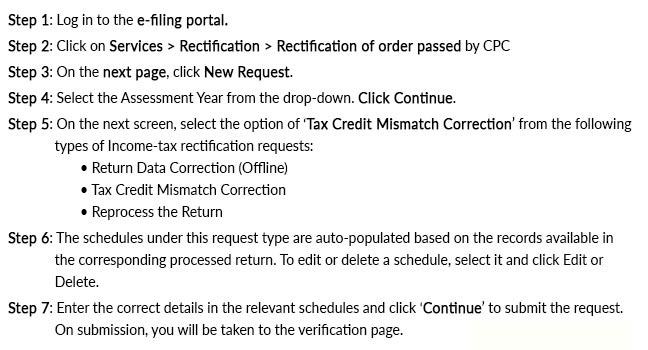
If a TDS mismatch is caused by an error in the TDS return filed by the deductor, taxpayers should contact the deductor and request that the necessary corrections be made. Once the revised TDS return is processed, the corrected TDS credit will be reflected in the taxpayer's records.
How to Claim TDS Credit in ITR if the Deductor Fails to Deposit the Tax
In such cases, taxpayers should contact their deductor or tax-deducting authority to ensure that the Tax Deducted at Source (TDS) is deposited with the government promptly. Additionally, taxpayers must verify that the deductor files the corresponding TDS return to reflect the credit accurately.
If the deductor refuses to correct the error or fails to deposit the tax, you may need to submit supporting documentary proof of the TDS deduction to the Income Tax Department to substantiate your tax credit claim.
If taxpayers are unable to submit the required supporting documents along with their Income Tax Return (ITR), they should still file the return within the prescribed due date and claim the eligible TDS credit. After the return is processed, the Income Tax Department may issue a notice if any discrepancy in the claimed TDS credit is identified.
If taxpayers receive a notice regarding a TDS mismatch, they should respond by submitting evidence to establish that the appropriate tax was deducted from their income. Supporting documents may include salary slips, Form 16, TDS certificates, or bank statements reflecting the net amount credited after TDS deduction. These records can help substantiate the claim for the eligible TDS credit.
If the supporting documents submitted by the taxpayer are found to be valid, the Assessing Officer may allow the eligible TDS credit and withdraw any tax demand raised on account of the mismatch. However, if the claim is rejected despite adequate evidence, the taxpayer may have to pursue the available legal remedies, including filing an appeal, as provided under the Income-tax Act.